







Search Results for: temperature recorder
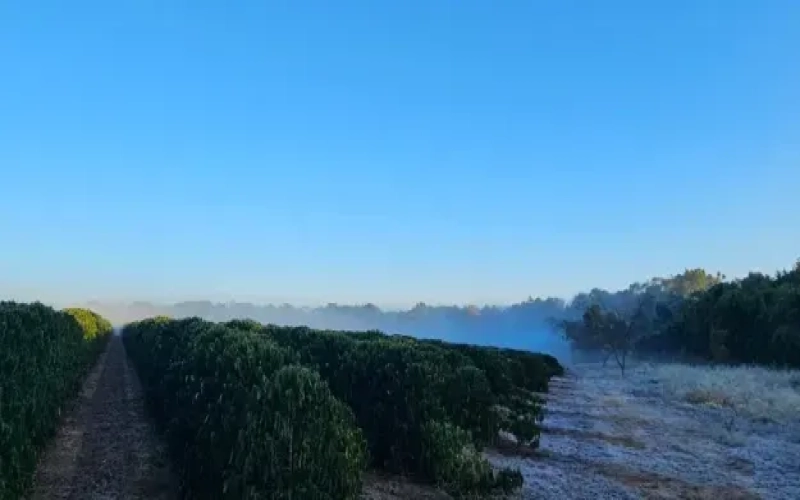
A cold wave and frost in south-central Brazil set record low temperatures, threatening coffee-growing regions and causing a sharp rise in futures prices.
Since last week, a strong cold wave has continued to sweep through south-central Brazil, with temperatures plunging below zero in many places, and the mountainous region of southern Minas Gerais even setting a new record for Brazil's lowest temperature. Snow and freezing rain have successively appeared in Santa Catarina and Rio Grande do Sul, and the Port of Santos was forced to suspend cargo operations due to severe sea conditions. Brazil's coffee harvest for the new season is now nearing its end, but the market is broadly concerned that frost will impact this year's crop and the growth of coffee in the 2025/26 season, especially in the mountainous region of Minas Gerais, which is dominated by Arabica cultivation. Affected by this, Arabica and Robusta coffee futures prices have soared sharply in recent days. Front Street Coffee will also continue to monitor weather developments in the producing regions and bring coffee lovers the latest analysis. [more…]
Artisan Roasting Software Operation Guide: Coffee Bean Temperature Curve Logging and Flavor Control Techniques
For coffee roasters pursuing consistent output and flavor reproducibility, Artisan is a rare open-source tool. It can connect to temperature recorders or PID controllers, collect bean temperature and air temperature data in real time during the roasting process, automatically generate visualized curves, and help judge the trends of the drying, Maillard, and development phases. This article compiles Artisan's core functions, compatible device list, export and reporting methods, and includes software screenshots and a version update summary. Whether you use Mac, Windows, or Linux, you can use it to optimize your roasting rhythm, making the flavor performance of every batch of Front Street Coffee beans more controllable and more reproducible. [more…]
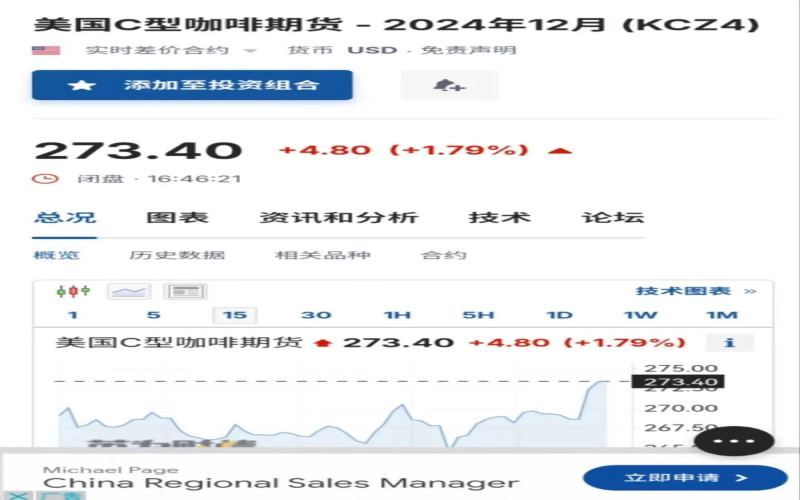
Arabica futures break through 273 cents to a ten-year peak, as extreme weather in Brazil continues to push coffee prices higher
The global coffee market is currently enduring a rare price storm. Driven by climate factors such as prolonged drought, high temperatures, and uneven rainfall distribution in Brazil, combined with steadily rising global coffee demand, both Arabica and Robusta coffee futures prices have hit record highs. Arabica futures have reached 273.4 cents per pound, a ten-year high; Robusta's surge has been even more ferocious, with an increase of 74% within the year. As the world's largest coffee producer, Brazil's domestic retail coffee prices have risen to their highest level since records began in 1997. This article will examine the climate, production, and market factors behind this round of coffee price increases, and look ahead to the prospects for the next harvest season. [more…]
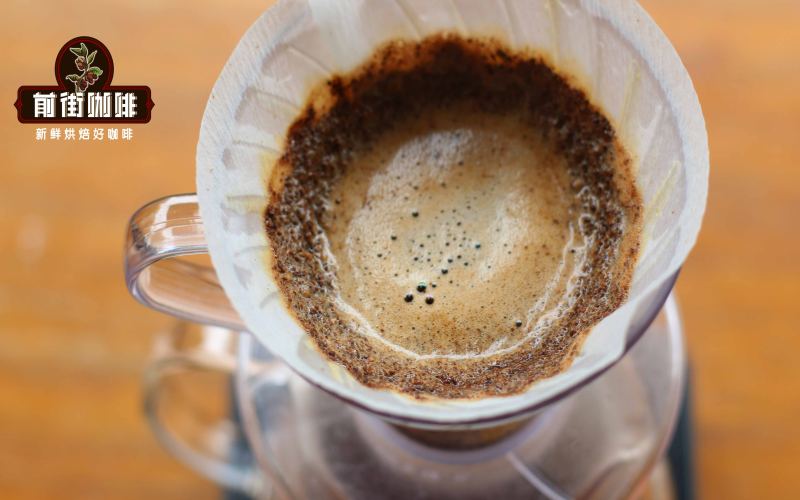
From pouring techniques to parameter records: practical approaches to systematically improve pour-over coffee across four dimensions
Many coffee enthusiasts come to Front Street Coffee, and besides being amazed by the rich bean list, they are also full of curiosity about the barista's brewing technique. Does pour-over rely on hand strength or brainpower? The answer is actually the latter. Water control and circular pouring are just basic entry-level skills. What truly determines the quality of a cup of coffee is the understanding of the relationships among parameters such as grind size, coffee-to-water ratio, water temperature, and time, as well as knowledge of the coffee bean's producing region characteristics and roast level. Starting from Front Street Coffee's brewing practice, this article sorts out four directions for improvement: solid pouring training, establishing parameter logic, categorizing bean characteristics, and recording and reviewing after each brew, helping pour-over beginners find a clear path for advancement. [more…]
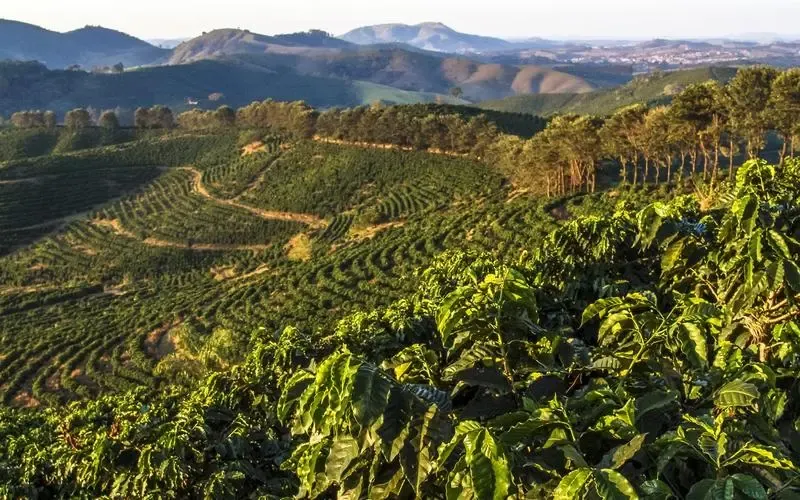
Brazil's April coffee exports surged 53.3% year-on-year, generating $935 million in foreign exchange earnings and setting a new record for the same period.
Latest data from the Brazil Specialty Coffee Association (Cecafe) shows that Brazil's coffee exports performed strongly in April this year, with a total of 4.222 million 60-kg bags exported, up 53.3% year on year, setting a record high for that month and generating US$935.3 million in foreign exchange earnings, an increase of 52.6% year on year. In the first four months of this year, cumulative exports reached 16.242 million bags, with revenue of US$3.444 billion, both setting all-time records. Arabica still accounted for 76.77% of total exports, while robusta export volume rose 528% year on year. Tight global supply, reduced production in Vietnam and the Red Sea crisis pushed up market demand and coffee prices. However, severe delays at major ports such as Santos, combined with the risk of frost in the south, mean subsequent exports still face the dual challenges of logistics and weather. [more…]

Brazil's 2026 Coffee Crop Hits a Record 67.6 Million Bags, Up 19.6% - Why Bean Prices Are Unlikely to Fall Sharply
Brazil's national supply company Conab expects the country's 2026 coffee crop to reach 67.6 million [more…]
Panama Carmen Estate: A Complete Analysis of the Geisha Legend and Terroir, from BOP Records to Record-Breaking Auction Prices
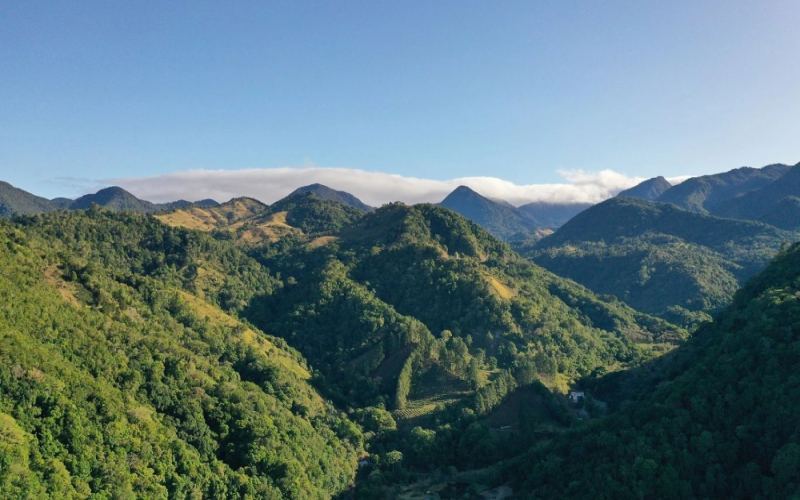
Panama occupies a pivotal position in the global specialty coffee landscape, and Geisha has made this Central American country famous worldwide. At the 2023 BOP competition, Carmen Estate won the washed group championship with a score of 96.5 for its washed Geisha, and the subsequent global auction set a historic high of US$10,005 per kilogram. Why is this estate able to repeatedly break records? Today, Front Street Coffee takes you into Carmen Estate, from Panama's geography and climate and the three major producing regions of Chiriquí Province, to Carmen Estate's cultivation history, variety structure, and processing techniques, for a comprehensive understanding of the terroir code and quality logic behind this champion estate. [more…]

Honduras Lychee Orchid Coffee: Barrel Fermentation Process Analysis and Full Record of Front Street Coffee Roasting and Brewing
The Lychee Orchid coffee beans from Honduras' Mocha Estate, through their unique barrel fermentation process, present a refreshing fruity acidity reminiscent of lychee and a rich sweetness like rum-filled chocolate. Front Street Coffee sorts through the origin information, variety characteristics, and processing method one by one, and meticulously records this bean's roasting curve, cupping performance, and pour-over parameters. This article will fully present Front Street's practical data from the roasting and brewing stages, including charge temperature, air vent and heat adjustment milestones, first crack development time, and the V60 dripper extraction plan, providing coffee enthusiasts with a reference quality-control file for Lychee Orchid. [more…]
Papua New Guinea Chimbu Coffee Pour-Over Record: Two Roast Profiles and Flavor Changes
Papua New Guinea is not only unique in its geographical location, but also produces the world-famous Bird of Paradise coffee. This article documents two pour-over roasting experiments with coffee beans from the Chimbu region: the first missed the fruity notes due to over-roasting, while the second dropped the beans promptly after a dense first crack, finally revealing sweetness and a lasting aftertaste. From green bean processing to brewing parameters, the author shares key details such as water temperature, coffee-to-water ratio, and bloom time, and compares the flavor differences between the two roasts. If you are also curious about coffee beans from mysterious regions, or want to understand the rich charm of Chimbu coffee, this pour-over record will provide you with practical reference. At the end of the article, recommendation information from Front Street Coffee is also included. [more…]
Hand-Pour Coffee for Absolute Beginners: A Practical Guide from Tasting and Journaling to Flexible Parameter Adjustment
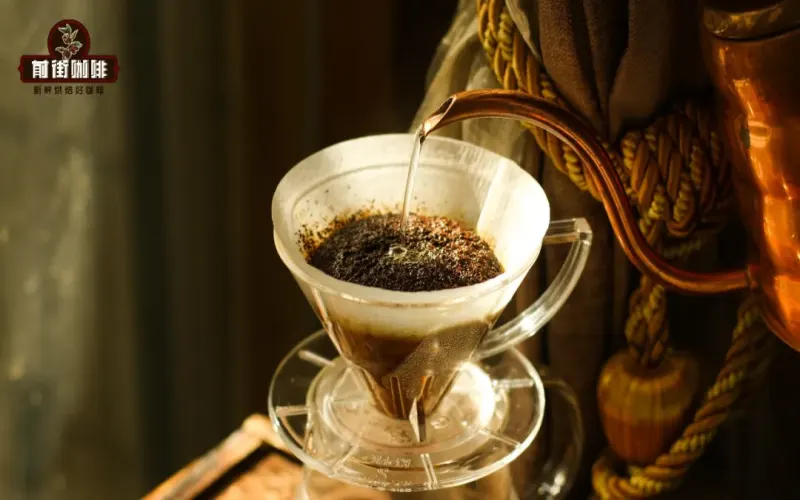
Many people who are just getting into pour-over coffee feel that the barrier to entry is high, but in fact, as long as you grasp the four core parameters of grind, water temperature, ratio, and time, brewing good coffee is not difficult. This article starts from a beginner's perspective and shares three practical tips for getting up to speed quickly: first, learn how to taste a cup of coffee, and build flavor judgment through drinking more and comparing, using cupping when necessary to understand the normal state of the beans; second, develop the habit of record-keeping, systematically tracking bean information, brewing parameters, and final performance, and learn to control variables to understand the impact of each parameter on extraction; finally, on the basis of familiarity with the logic of the parameters, adjust flexibly and make targeted corrections for problems such as under-extraction. In the article, Front Street Coffee uses Huakui as an example, giving specific parameters and adjustment ideas to help beginners avoid detours. [more…]
Complete unboxing record of the La Marzocco Strada espresso machine: Analysis of the pressure profiling technology in both MP and EP versions
In recent years, variable pressure extraction has become the most closely watched technological direction in the field of espresso machines. From Synesso to Slayer, and then to the Strada launched by La Marzocco, the design of pressure control valves has continuously evolved. This article provides a complete record of the unboxing of the La Marzocco Strada at the illy Coffee University in Shanghai, China, detailing the appearance, structure, and core differences between the Strada MP manual version and the Strada EP electronic version. The MP version directly controls water flow and pressure through an internal mechanical valve, while the EP version uses an electronic gear pump to achieve stepless pressure variation from 0 to 12 BAR and can store pressure profiles. For coffee enthusiasts following the technological development of espresso machines, as well as readers of Front Street Coffee, this unboxing record provides rare hands-on details and firsthand observations. [more…]
Colombian Geisha Coffee Flavor Analysis: A Complete Record of Cultivation at San Pedro Estate, Washed Processing, and Roasting & Brewing
Geisha has always been a top-tier name in the specialty coffee world, with Panama Geisha enjoying the most dazzling halo, but Colombia Geisha is equally not to be underestimated. This article takes you into Finca San Pedro in the Tolima region of Colombia to learn about this Geisha's terroir, washed processing flow, green bean information, and roasting curve, along with cupping and brewing records. From floral and citrus notes to a black tea finish, see how this Colombian Geisha recommended by Front Street Coffee showcases soft and elegant sweet-acidity layers with a lingering sweet aftertaste. [more…]
Front Street Coffee Colombia Mitra Estate Natural Geisha: A Comparative Record of V60, Ice Eye, and Siphon Brewing
Front Street Coffee recently acquired a natural Geisha from Colombia's Mitra Estate, and after several days of resting, it's officially time to brew. This article fully documents the bean's origin background and flavor characteristics, and uses three different brewers—Hario V60, Ice Eye dripper, and siphon—for brewing tests, detailing the respective coffee dose, grind size, water temperature, coffee-to-water ratio, and staged pouring schemes, while also presenting the differences in flavor expression across the three brewers. At the end, equipment selection suggestions are given based on brewing goals: choose V60 to highlight layering, choose Ice Eye to enhance sweetness, and choose siphon to boost mouthfeel, for coffee lovers' reference. [more…]
A Complete Analysis of Pour-Over Coffee Parameters: Scientific Adjustment Approaches to Coffee-to-Water Ratio, Grind Size, Water Temperature, and Time
Many coffee enthusiasts make a point of visiting Front Street Coffee, drawn not only by the impressive variety of coffee beans but also by the baristas' brewing skills, which never fail to impress. When it comes to brewing a great cup of coffee, does it ultimately come down to hands-on technique or mental understanding? Front Street Coffee believes that water flow control and pouring are merely the basics. What truly determines the flavor direction is a deep understanding of the four key parameters: grind size, coffee-to-water ratio, water temperature, and time. This article will systematically lay out ways to improve your pour-over skills, from the interconnected relationships between parameters and methods for categorizing coffee bean characteristics to practical tips for keeping brewing records. Whether you are a beginner just getting into pour-over or an experienced brewer looking to break through a plateau, you'll find actionable guidance here. [more…]
Sumatra Tiger Man Estate Mandheling Washed Process: Flavor Layers and Pour-Over Brewing Record
Mandheling coffee beans from the Huta Manor in the Lintong region of Sumatra, Indonesia, processed using the wet-hulled method and hand-sorted to 19 mesh and above, medium-roasted by Cafe of Memory in Hangzhou. This article documents the complete brewing process for this coffee, including parameters such as the Bonmac V02 dripper, 90°C water temperature, and a 1:15 coffee-to-water ratio, along with a detailed evaluation of its aroma and mouthfeel. Orange peel, herbs, woody smokiness, and faint floral and fruity notes interweave, while a medium body and subdued acidity form its distinctive character. Front Street Coffee recommends this bean, believing that its cleanliness and layered complexity still affirm the flagship status of Tiger-grade Mandheling. [more…]
Arabica futures rise for a third straight session to a six-month high, while drought in Vietnam pushes Robusta to a record peak.
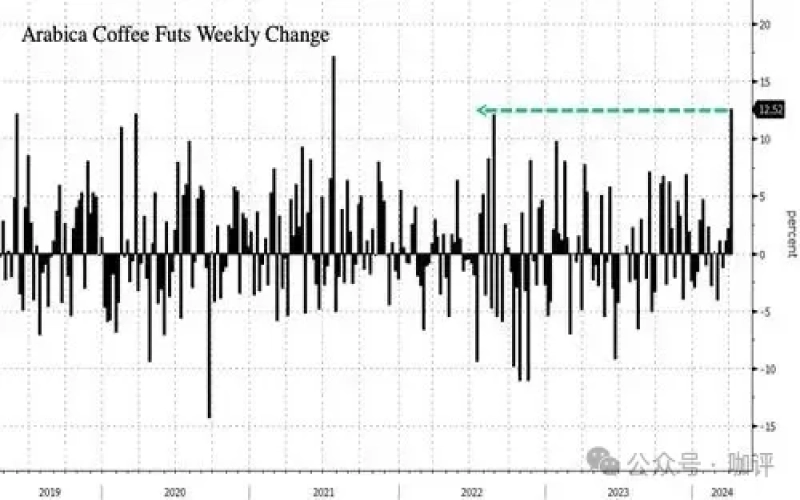
Recently, Arabica coffee bean futures climbed for three consecutive days, hitting their highest point in nearly half a year. The May contract surged 12.5% during the week, settling at $2.12 per pound, the strongest weekly performance since July 2021. Meanwhile, the International Coffee Organization's composite price index rose to 186.36 cents per pound, an 18-month high; Robusta prices even reached their highest level since October 1994. The main driver was a heatwave and drought in Vietnam, which tightened Robusta supply and indirectly pushed Arabica higher. Vietnam's output is expected to drop by 20%, with exports declining in tandem, and coffee exports from Asia and Oceania as a whole falling 17%. The EU's deepening reliance on Vietnamese Robusta, combined with the Red Sea situation driving up shipping costs, has given coffee prices room for continued gains. [more…]
Brazil's new harvest season picks up pace, coffee exports may hit a record high of 46.3 million bags
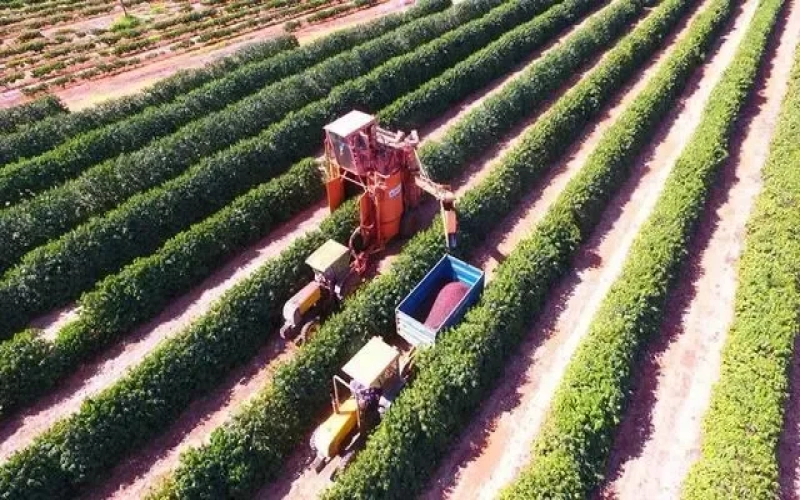
The new coffee harvest season in Brazil is accelerating, with both Robusta and Arabica harvest progress outpacing last year's same period, promising to ease the tight global supply situation. Influenced by factors such as reduced production in Vietnam and the Red Sea crisis driving up logistics costs, market demand for Brazilian coffee has surged, and Cecafé expects exports for the 2023/24 season to reach 46.3 million bags, setting a new historical record. Meanwhile, frost warnings are prompting coffee farmers to rush their harvest, and multiple countries are also accelerating shipments before the EU's deforestation regulation takes effect. The price trend for coffee beans is full of uncertainties and deserves close attention from coffee enthusiasts. [more…]
Colombia Finca El Paraiso Coffee: Cauca Regional Terroir, Double Anaerobic Fermentation and COE Gold Record
Colombia is an important specialty coffee-producing country worldwide, and its coffee grading is based on bean screen size rather than altitude. The Cauca region, with its unique terroir of surrounding high mountains, ample sunlight, and a stable climate, nurtures a rich and balanced coffee flavor. Finca El Paraiso is located in Cauca Department and was founded by Diego Samuel in 2008. Starting from a small 2.5-hectare farm, it set the highest bid record in Colombian history at the COE auction through an experimental double anaerobic fermentation process. This article will guide you through the terroir conditions of the Cauca region, the development history of Finca El Paraiso, and its complex fermentation process, and introduce related batch products from the Front Street brand. [more…]
Kenya AA Pour-Over Coffee Ground-to-Water Ratio Practical Analysis: Flavor Differences from 1:15 to 1:13 and 1:17, and Front Street Asalia Brewing Record
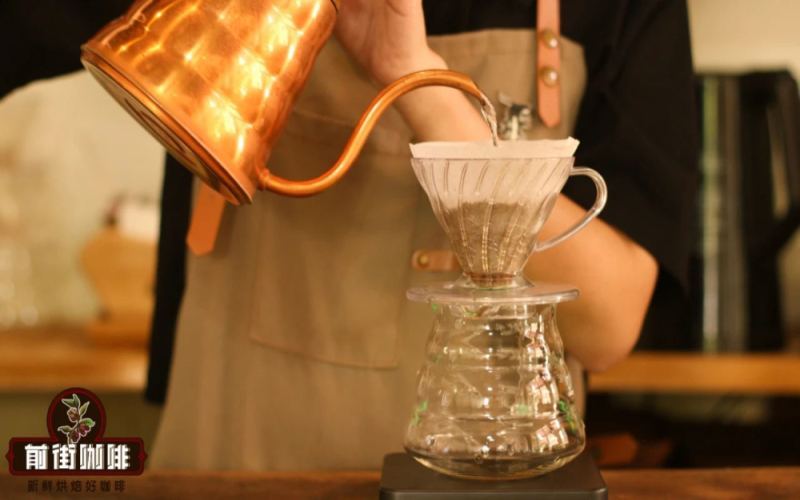
The coffee-to-water ratio for pour-over coffee is often seen by beginners as the biggest obstacle. At Front Street Coffee, through conversations with customers in our stores and with enthusiasts, we have found that most questions revolve around this one parameter. This article uses the Front Street Asalia AA TOP coffee beans from Kenya's Thika region as a sample, keeping the three-pour brewing method and a water temperature of 90-92°C fixed, changing only the coffee-to-water ratio, and conducting comparative brews at 1:15, 1:13, and 1:17 respectively, recording the changes in flavor direction such as citrus, cherry tomato, smoked plum, and caramel. At the same time, it sorts out the difference between extraction yield and concentration, the Golden Cup theory range, the two major extraction methods of immersion and filtration, and includes a complete explanation of Kenya's 72-hour washed processing method, helping readers understand how the coffee-to-water ratio affects the acidity, sweetness, and body thickness of a cup of pour-over coffee. [more…]
Espresso Machine Turned into a Pasta Maker? A Netizen's Full Record of a Butter Latte Fiasco and Lessons Learned
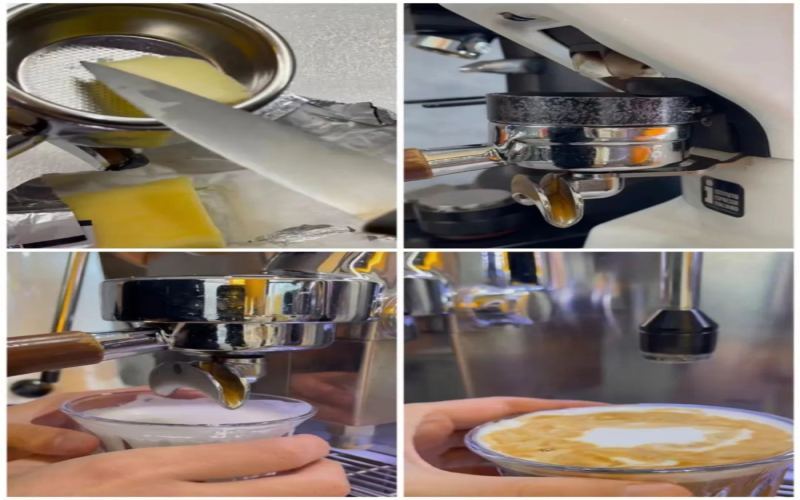
In recent years, more and more coffee enthusiasts have chosen to buy their own espresso machines at home, starting with espresso and gradually mastering the preparation of drinks like lattes, latte art, and dirty coffee. Recently, a netizen tried to recreate the butter latte commonly seen in coffee shops at home. To skip the wait for butter to soften at room temperature, they had a sudden idea: put a block of butter directly into the portafilter and tamp it together with the coffee grounds for extraction. This method sparked a nationwide copycat challenge, but the results often ended in failure—the butter was squeezed into thin strips by the pressure and shot out from the bottomless portafilter, coffee liquid splattered everywhere, and the countertop was left in a mess. Onlookers joked that the espresso machine had switched careers to become a pasta maker. This article fully documents the process of this creative experiment, the real feedback from netizens, and warm reminders from experienced individuals. If you're also tempted to try it, you might want to first read this compilation by Front Street Coffee before making a decision. [more…]